What is SEO? A plain-English guide for business owners
In short
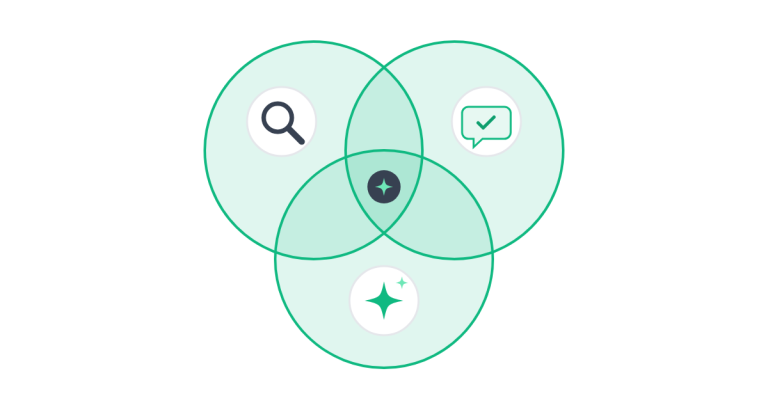
SEO (search engine optimization) is everything you do to help your business show up when people search Google for what you sell. It comes down to three things: Google can find and read your website, your website clearly answers what people are searching for, and other people around the web vouch for you.
SEO in one sentence
SEO stands for search engine optimization. In plain English, it’s how you get Google to recommend your business when someone searches for what you do.
That’s it. Everything else you hear about SEO, from keywords to backlinks to site speed, is just a way of making that recommendation more likely.
A simple example
Example · A local bakery
Maria runs a bakery in Denver. A customer types custom birthday cake Denver into Google. Google looks through thousands of pages and picks about ten to show on the first page. SEO is the work Maria does so her bakery is one of those ten, ideally near the top.
If her website just says “Welcome to Sweet Spot” with a few photos, Google has very little to go on. If she has a page called “Custom birthday cakes in Denver” with flavors, prices, how far ahead to order and real photos, Google can easily tell she’s a great match.
How Google decides who to show
Google doesn’t publish its exact formula, but it mostly comes down to three questions. Each one lines up with a type of SEO you’ll hear people talk about.
1. Can Google find and read your website?
This is technical SEO. If your site is very slow, broken on phones, or accidentally hidden from Google, it won’t show up no matter how good your business is.
Example: a landscaper rebuilds their website and the new version is set to “discourage search engines” by mistake. Within weeks, they disappear from Google. One checkbox fixes it.
2. Does your website answer what people are searching for?
This is on-page SEO, sometimes called content. Your pages need to clearly say what you do, who it’s for and where you work, using the words your customers actually type.
Example: a plumber’s homepage says “Quality service since 1998.” Nobody searches for that. A page titled “24-hour emergency plumber in Aurora” matches what a panicked homeowner types at 11pm.
3. Do other people vouch for you?
This is off-page SEO. Google trusts businesses that other people trust: reviews, links from other websites, and mentions in places like local news, directories and industry sites.
Example: two coffee shops have similar websites. One has 12 Google reviews. The other has 300 reviews and was featured in a local “best coffee” list. Guess which one shows up first.
Local SEO: the version most small businesses need
If your customers come to you, or you go to them, you also want to show up in the map results. That’s local SEO, and it runs mostly on your Google Business Profile: your listing on Google Maps with your hours, photos, services and reviews.
When someone searches dentist near me or auto repair open Sunday, the map listings at the top are often what they see first. A complete, active profile with recent reviews is one of the fastest wins for a local business.
What SEO is not
- It’s not paid ads. The results marked “Sponsored” are ads. SEO is about the free results below them.
- It’s not a one-time fix. Your competitors keep working, and so does Google. SEO is more like going to the gym than buying a gadget.
- It’s not stuffing keywords everywhere. Writing “Denver plumber” twenty times on a page makes it worse, not better. Write for people first.
- It’s not instant. Results usually build over months, not days. Anyone promising page one by next week is selling something.
Is SEO still worth it now that AI search exists?
Yes, but it’s changing. Google now shows AI-written summaries at the top of many searches, and fewer people click through when they do. A 2025 Pew Research study found people clicked a regular search result in 8% of visits when an AI summary appeared, compared with 15% when it didn’t.
The good news: AI search tools rely on the same basics as SEO. A clear website, helpful answers and a good reputation still win. On top of that, you now also want to be the answer AI pulls from, which is called AEO, and the business AI recommends by name, which is called GEO. We explain how all three fit together in SEO vs AEO vs GEO.
Where to start
- Connect Google Search Console. It’s free, and it shows what people search to find you and any problems Google sees on your site.
- Make every main page say what you do, who it’s for and where. Be specific and plain. “Bookkeeping for construction companies in Colorado” beats “Financial solutions.”
- Give each main service its own page. One page listing everything can’t rank for everything.
- Ask every happy customer for a review. Make it easy with a direct link.
Free tool
Want your own step by step SEO plan?
Answer 13 quick yes or no questions and get a plan that puts the fixes that matter most first. No email needed. Get my free plan →
Common questions about SEO
How long does SEO take to work?
Usually months, not days. Quick fixes like a broken setting or a missing Google Business Profile can help within weeks. Ranking for competitive searches takes steady work over time.
Can I do SEO myself?
Many businesses can handle the basics if they have a few hours a week and can edit their own website. Our free quiz, Should I do my own SEO and AI search?, helps you decide.
What’s the difference between SEO and paid ads?
With ads, you pay for every click and the traffic stops when you stop paying. With SEO, you earn your spot in the free results, and the traffic keeps coming as long as you stay relevant.
Keep reading: SEO and AI search basics
- Next step: How to do SEO →
A simple step by step guide to doing your own SEO. - What is AEO? Answer engine optimization explained →
How to become the direct answer in Google’s AI summaries and voice search. - What is GEO? Generative engine optimization explained →
How to get ChatGPT and other AI tools to recommend your business by name. - SEO vs AEO vs GEO: what’s the difference? →
All three side by side, with one business example.
Sources
- Pew Research Center, July 2025 · Google users are less likely to click on links when an AI summary appears