What is GEO? Generative engine optimization explained in plain English

In short
GEO (generative engine optimization) is getting your business mentioned and recommended in answers written by AI tools like ChatGPT, Perplexity, Gemini and Google’s AI Mode. Instead of ranking a web page, the goal is to be one of the businesses the AI names when someone asks for a recommendation.
GEO in one sentence
GEO stands for generative engine optimization. A “generative engine” is an AI tool that writes its own answer instead of showing a list of links. GEO is the work you do so that answer includes your business.
Why it matters now
People don’t just search anymore. They ask. ChatGPT alone has more than 900 million weekly users, according to figures OpenAI shared in February 2026. Many of those people are asking things like “Who’s the best accountant for a small business in Boulder?” and getting back a short list of names.
Those visitors also tend to be ready to buy. One study of ecommerce brands found visitors from AI search converted at 1.8 times the rate of visitors from regular Google search. If you’re not on the AI’s short list, you’re not in the running.
A simple example
Example · A bookkeeping firm
The owner of a small construction company asks ChatGPT: What’s a good bookkeeping service for construction companies in Colorado? ChatGPT writes a short answer and names three or four firms, with a line about each one.
A bookkeeping firm that clearly says on its website “we specialize in construction companies in Colorado,” has reviews that mention construction clients, and shows up in a couple of industry directories has a real shot at being named. A firm whose site just says “bookkeeping for businesses of all sizes” probably won’t make the list, even if it’s great at the work.
How AI tools decide who to recommend
No AI company publishes its exact rules, but the patterns are clear. AI tools tend to recommend businesses when:
- Your website says exactly what you do and who you serve. AI can only recommend you for what it can clearly tell you do.
- Other websites talk about you. Reviews, directories, “best of” lists, local news, industry sites and forums like Reddit. This is the biggest difference from classic SEO: what others say about you carries a lot of weight.
- Your details match everywhere. Same business name, services and location on your website, Google, Yelp, LinkedIn and directories. Mixed signals make AI less confident.
- Your content is easy to quote. Specific facts, numbers, and sources help. In the research paper that coined the term GEO, a team including Princeton University researchers found that changes like adding sources, quotes and statistics could boost a page’s visibility in AI answers by up to 40%.
- AI tools are allowed to read your site. Some websites block AI tools by accident through a settings file called robots.txt. If they can’t read you, they can’t recommend you.
How GEO is different from SEO and AEO
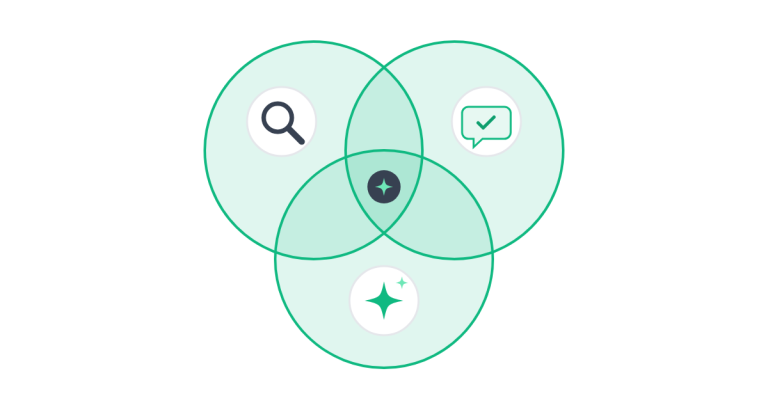
SEO gets your pages into Google’s results. AEO gets your content quoted as the answer to a question. GEO gets your business named when someone asks AI for a recommendation. They build on each other, and most of the groundwork is the same. We break down all three side by side in SEO vs AEO vs GEO.
Try this: a 10-minute GEO test
You can check where you stand right now, for free.
- Write down three to five questions a customer might ask, like “best family dentist in Boulder” or “who installs solar panels for small businesses in Fort Collins?”
- Ask each one in ChatGPT, Perplexity and Google’s AI Mode.
- Note who gets named, what the AI says about them, and which websites it cites.
- Look at the businesses that show up. What do their websites and reviews say that yours doesn’t?
How to start with GEO
- Get specific on your website. Say exactly who you serve and where. “Bookkeeping for construction companies in Colorado” beats “Bookkeeping for all businesses.”
- Make sure AI tools can read your site. Check yourwebsite.com/robots.txt for lines blocking GPTBot, PerplexityBot or ClaudeBot.
- Get mentioned in more places. Start with directories, partners, suppliers and associations you already belong to.
- Ask for reviews that mention specifics. “They handled bookkeeping for our construction company” helps more than “Great service.”
- Repeat the 10-minute test every few months. AI answers change, so keep checking.
Free tool
How much could AI search be worth to you?
Enter 4 numbers about your business and see roughly what you could be missing in AI search, with every assumption shown. No email needed. Try the calculator →
Common questions about GEO
Is GEO replacing SEO?
No. AI tools lean on the same signals SEO builds: clear websites, helpful content and a strong reputation. GEO adds to SEO rather than replacing it.
Can I pay to be recommended by ChatGPT?
Not in the regular answers. Being recommended comes from what your website and the rest of the web say about you. That’s why GEO focuses on reputation and clarity.
How long does GEO take?
It varies. Fixing a blocked site can help quickly once AI tools revisit it. Building mentions and reviews across the web takes longer, the same way reputation does offline.
Keep reading: SEO and AI search basics
- Next step: How to do GEO →
A simple step by step guide to getting recommended by AI. - What is SEO? A plain-English guide →
How Google decides who to show, and where to start. - What is AEO? Answer engine optimization explained →
How to become the direct answer in Google’s AI summaries and voice search. - SEO vs AEO vs GEO: what’s the difference? →
All three side by side, with one business example.
Sources
- Search Engine Land, February 2026 · OpenAI: ChatGPT now has 900 million weekly active users
- ThoughtMetric, April 2026 · AI search traffic compared with organic search over 15 months
- Aggarwal et al., GEO: Generative Engine Optimization · The research paper that introduced GEO